Sybilion
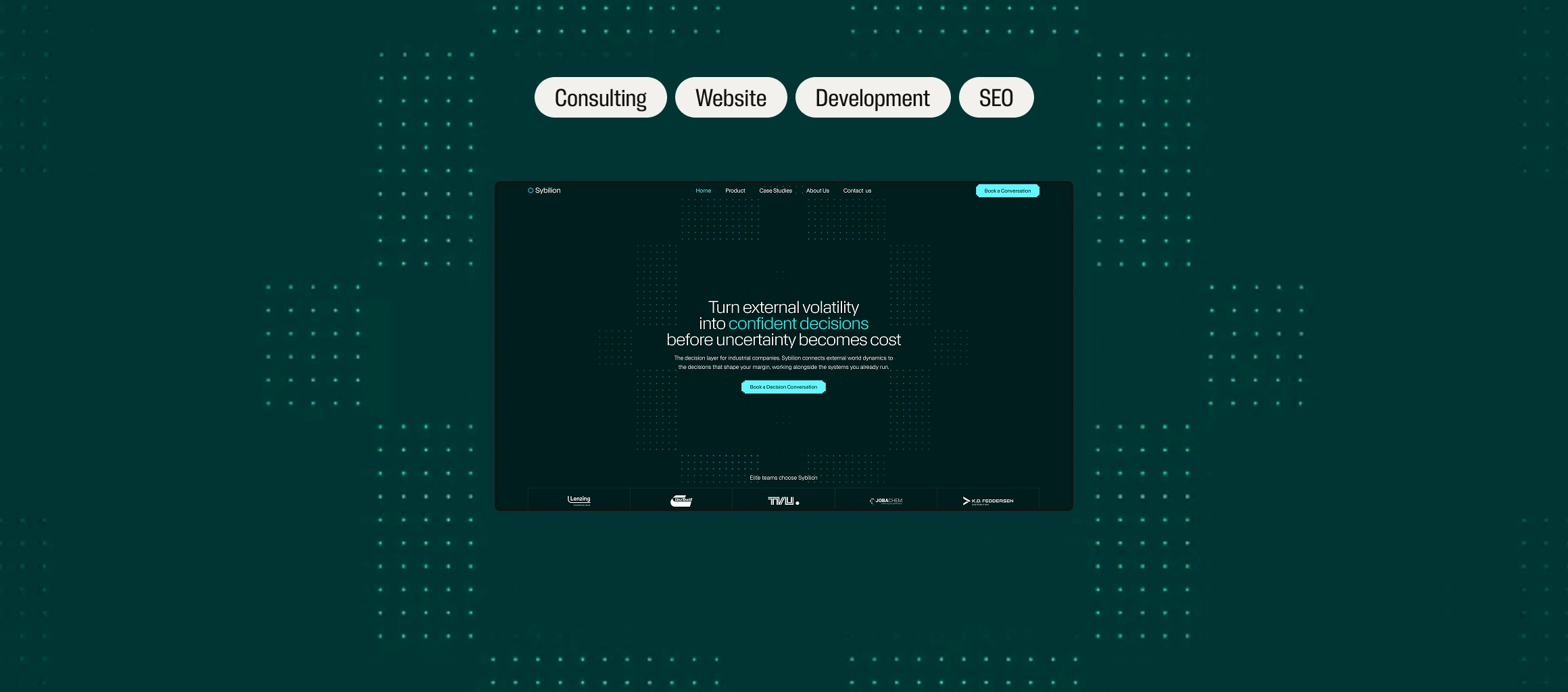
At a glance
Sybilion had repositioned from forecasting software to a decision layer for industrial companies, but weeks before a funding announcement its website still told the old story. In a five-day sprint we brought the live site into line with the new positioning, then stayed on a rolling retainer that keeps the site in shape and has taken our UX work into the product.
From kick-off to a site ready for the funding announcement
Seed round Sybilion announced on 11 March, with the new story already on its website
Google search impressions over the three months to July, on the retainer
The client
Seed-stage, and mid-pivot.
Sybilion builds decision intelligence for industrial companies in chemicals, plastics, packaging and manufacturing. It connects external market signals, from commodity prices to freight rates and energy futures, with a company’s own exposure, so buying and planning teams can act earlier and protect margin.
In early 2026 the company redefined itself. It was no longer a forecasting platform but “the decision layer for industrial companies”, with a new value proposition and messaging to match. A seed round was closing, and the announcement was set for March.
The brief
A new strategy, and a site still saying the old one.
The request was to revise the site and update its content. The real problem sat underneath. The site still led with forecasting and AI, the exact framing the repositioning was meant to retire, and the funding announcement was about to send investors, press and prospects straight to it.
For a technology company, the website is part of the due diligence. It has to tell the same story as the pitch, and it cannot break on a phone. Sybilion’s team had defined the new story. What it needed was senior UX judgement to carry that story onto the live site, fast, and to decide what to change first.
How we worked
One sprint, then a standing seat.
A fixed week to get the website ready for the raise, then a day a month that has moved from the website into the product. Each phase turned on a single decision.
-
01One week
The sprint
The kick-off set a single test: after visiting the site, would a prospect still think Sybilion was a forecasting tool? Over the week the hero took the approved one-liner, “Turn external volatility into confident decisions before uncertainty becomes cost”. “Request a Demo” became “Book a Decision Conversation”, a new problem section named the buyer’s situation, and the entire product page was rebuilt around five capabilities in place of a forecasting suite. The same week we made responsive fixes across the site, repaired broken links and cleared out leftover references, so every page was ready, not just the homepage.
Key decision
Fix the live site. Don’t rebuild it.
A redesign is the usual answer to a site that tells the wrong story, and it would not have been ready in time. The gap was in what the site said, not in how it looked, and the visual design was already serious enough for an industrial buyer.
So we worked inside the existing build and changed the words, structure and calls to action a visitor actually reads, along with the broken links and leftover references that make a young company look unfinished. Any new sections had to conform to the existing visual design language, and we matched it, a skill not every designer has. The story changed, and the site never went down.
-
02Early March
Live before the announcement
On 11 March, Sybilion announced a $4.2M seed round, and the site that investors, press and prospects arrived at was telling the new story.
Key decision
Ship what the announcement needs. Queue the rest.
The longer plan held plenty of good ideas: industry pages, a self-assessment to capture leads, deeper personalisation. Any one of them could have eaten the week. We agreed a “phase one” at kick-off, the changes the announcement could not do without, and moved everything else into later phases.
That kept the announcement date from depending on the biggest pieces of work, and it gave the retainer a ready-made roadmap.
-
03From March
A day a month of UX consulting
After the sprint, Sybilion kept us on a rolling retainer of one day a month of senior UX consulting, scaled up when the work needs it. We continued to refine the website page by page on desktop and mobile, rebuilt the navigation with a new dropdown for Solutions and Platform that fits the visual design language, and kept sharpening the message as the positioning settled.
Key decision
Build the publishing engine, not just pages.
Sybilion’s SEO plan needed a steady flow of new pages: articles, plus solutions pages written for each industry. We could have built them one at a time, and a day a month would have gone on data entry.
Instead we built out the blog and the content management behind it, so the team can publish on their own and our time goes on the work that needs senior judgement.
-
04April
Into the product
With the website steady, the retainer moved into the product. We ran a usability review of the application before release and reported eight issues, each with what we saw, why it matters to the user and what to change.
Key decision
Rank by trust, not by count.
Most of the findings were minor polish. The one that mattered most was an error state too vague to explain itself, the kind that makes a user doubt the data rather than one data point. In a product whose job is confident decisions, that is the most expensive kind of friction.
So the review was ranked by severity, one major, two moderate and five minor, with the trust and dead-end issues at the top, and the team knew where to start.
-
05September
Three routes through onboarding
Sybilion’s newest product had to show its value to new users on their own, without leaning on the sales team. We audited onboarding against established usability heuristics, grounded in the team’s personas and a hands-on walkthrough, and listed the immediate fixes.
Key decision
Recommend a route, and say what it rests on.
The real question was how much to ask a new user before handing anything back. We set out three routes: ask everything up front, ask a fixed middle amount, or ask the least and build the result with the user one step at a time.
We recommended the progressive route, built on one rule: what you ask and what you hand back must grow together. While we recommended the progressive route, we also gave the team best practices to fall back on as they grow and learn from their own data.
-
06Today
Still on the retainer
Seven months on, the retainer is still rolling. What began as a week of website fixes has become an in-house UX consultant across the website and the product, without the cost of a full-time hire.
The work
The decision layer, on the page.
The product work is covered by a non-disclosure agreement, so it is described above rather than shown.
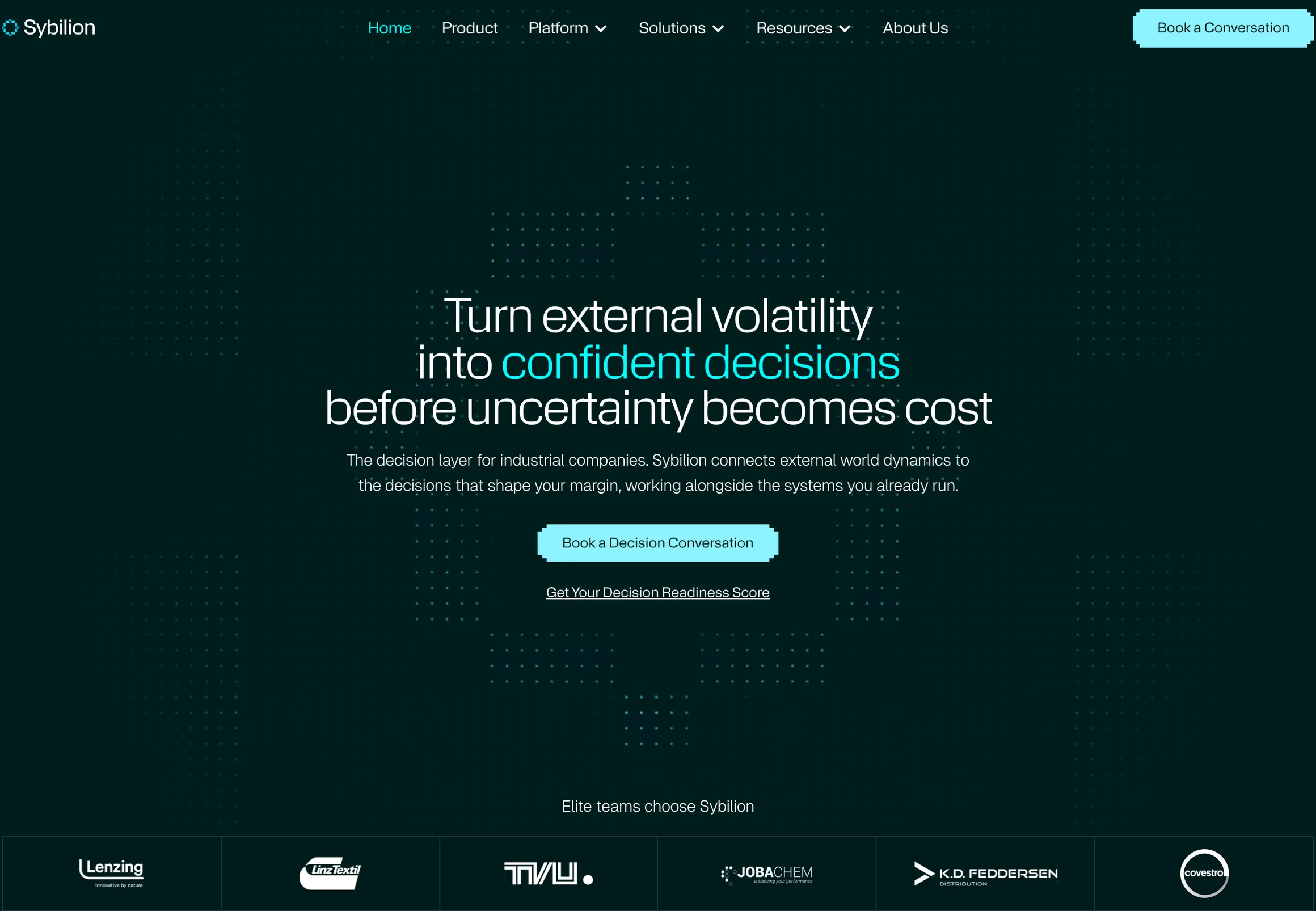
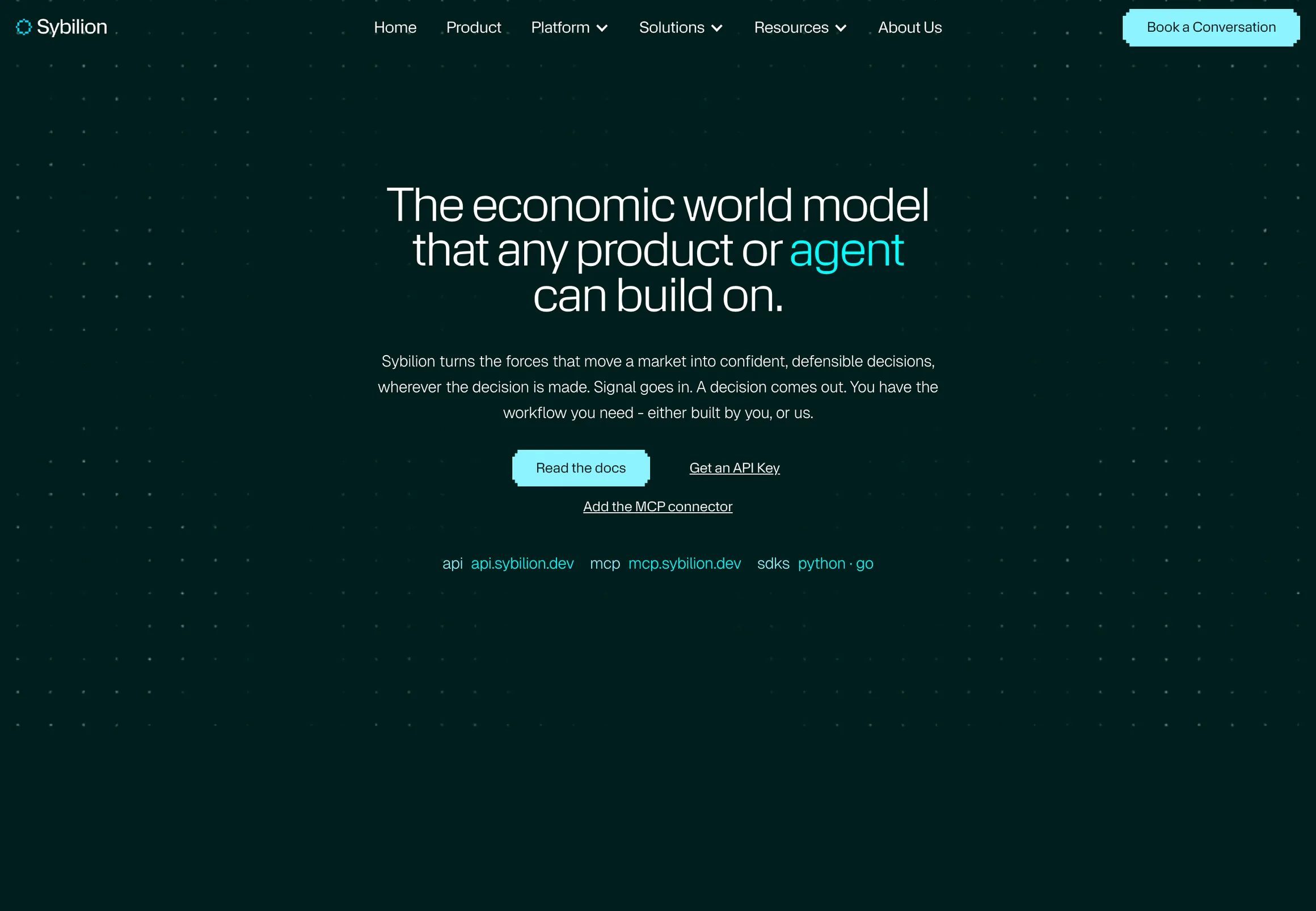
Homepage
Positioning first.
The hero leads with the sentence the whole repositioning was built on, and the main call to action asks for a decision conversation, not a demo.
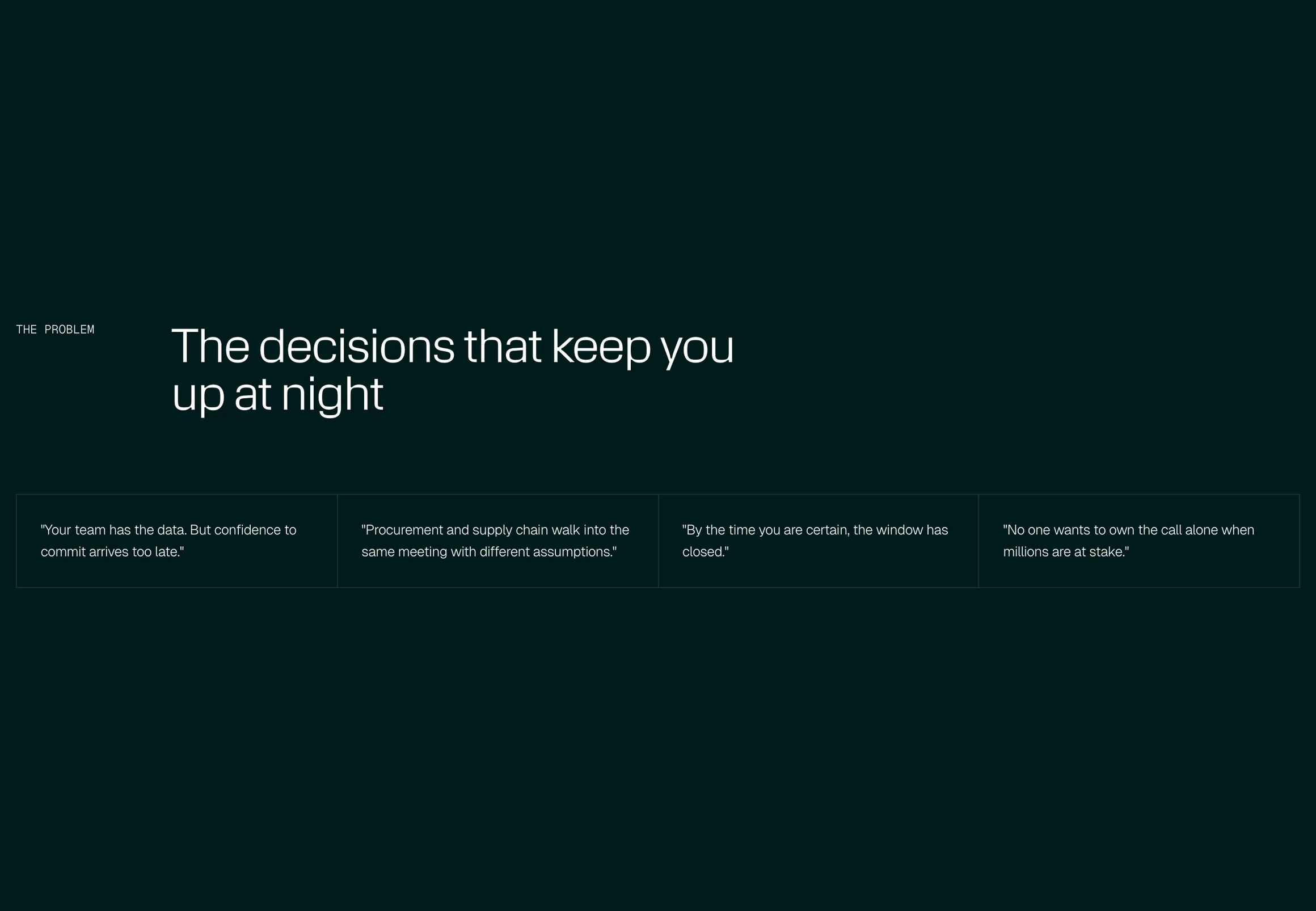
Problem section
The buyer’s problem before the product.
Situations a procurement or supply chain lead will recognise, so the right visitor qualifies themselves before reading a word about features.
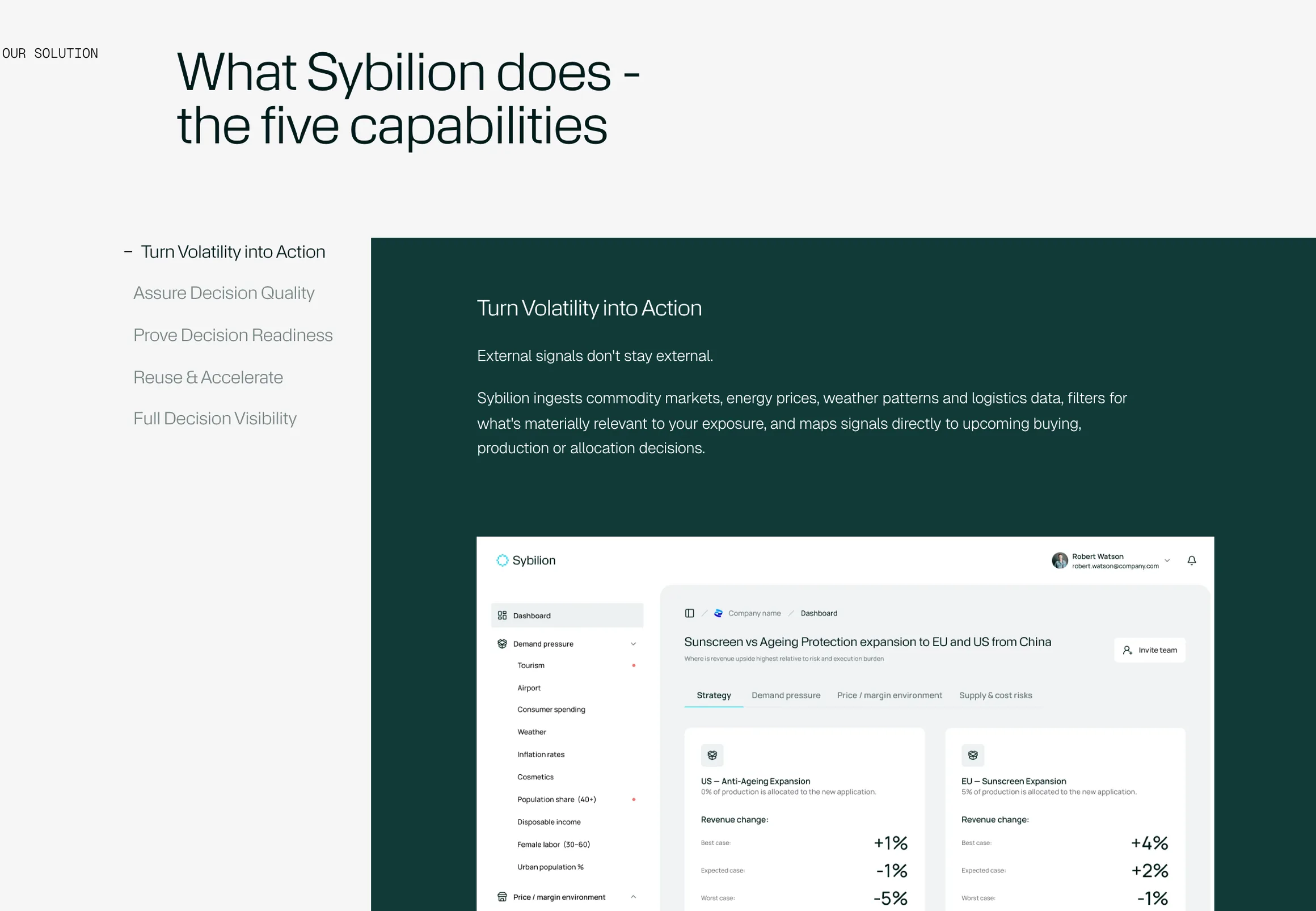
Product section
Five capabilities, not a forecasting suite.
The old product names described forecasts. The new section describes what a team can decide, from turning volatility into action to full decision visibility.
Blog and solutions pages
Pages the team can publish themselves.
Articles and industry pages run on content management we set up, so the SEO plan moves at the team’s pace, not ours.

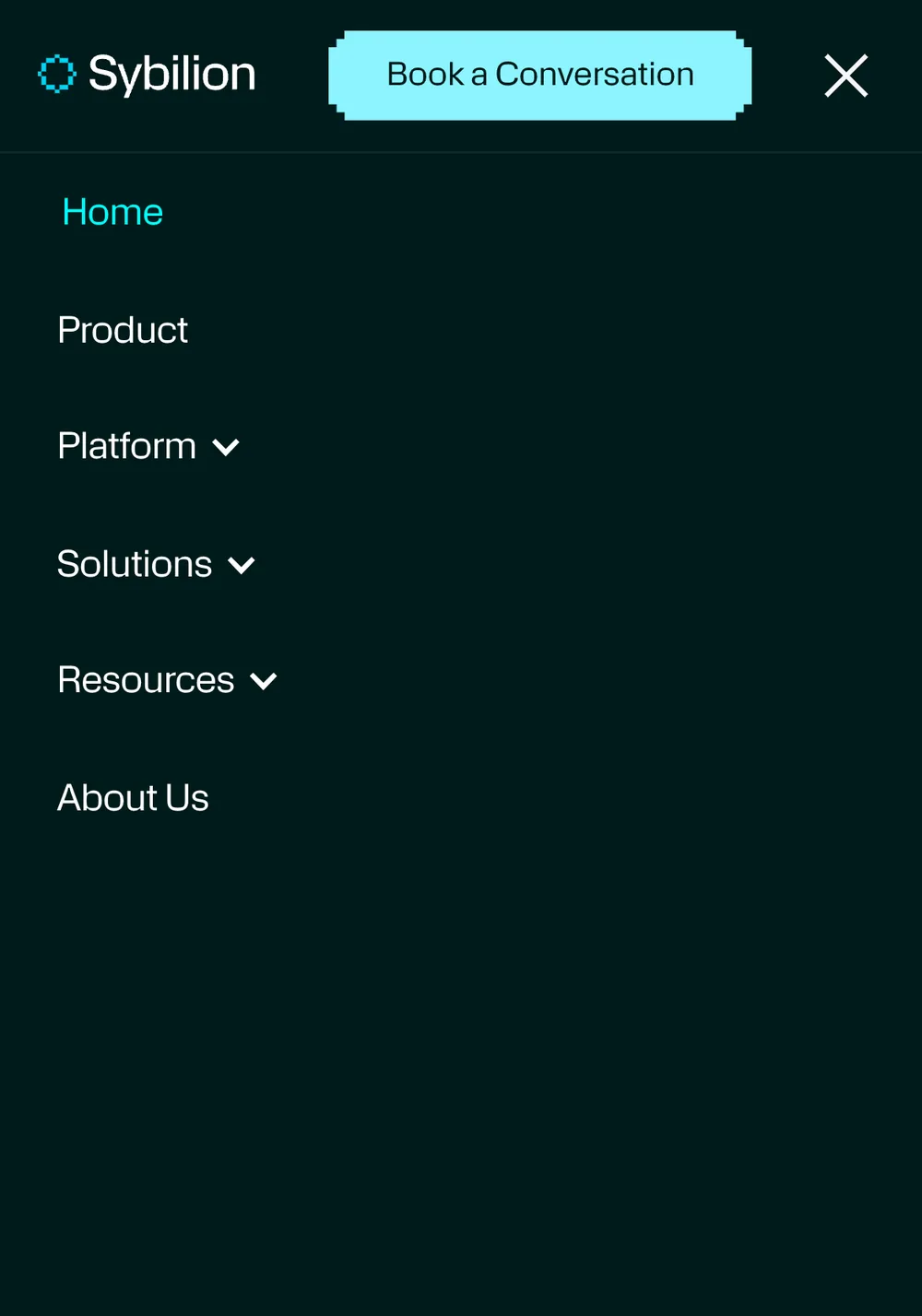
Mobile
Refined on a phone, page by page.
Investors and buyers often open a link on their phone first. Every page was refined for mobile, along with a navigation that works with a thumb.
Outcomes
Ready for the raise, then easier to find.
The first job was a website that told the new story before the announcement. It was ready for the $4.2M seed round and its announcement. We did not raise the money. We made sure the website backed up the story.
On the retainer, the site has become easier to find. Over the three months to July, Sybilion’s own Search Console report showed Google impressions roughly tripled, to 15.4K, for the language its buyers actually search, with core solutions and content pages averaging position 8.7, around page one.
The commercial signal is the relationship itself. A five-day sprint became a rolling retainer, and the scope has grown from the website into the product.
Google search impressions over the three months to July 2026
Average Google position for core solutions and content pages, July 2026
UX consulting, website and product